Plaster Crack Repair in East Chicago, IN
In East Chicago, fixing a plaster crack begins with one simple question: is the plaster still holding on?
The city was incorporated in 1893 and grew from 3,411 people in 1900 to more than 24,000 by 1910, so a great many houses on both the Indiana Harbor side and the West Side were finished in plaster long before drywall became the normal choice. That plaster can outlast much of what was built around it, but it cracks, bulges and lets go in ways drywall does not, and the repair has to account for that.
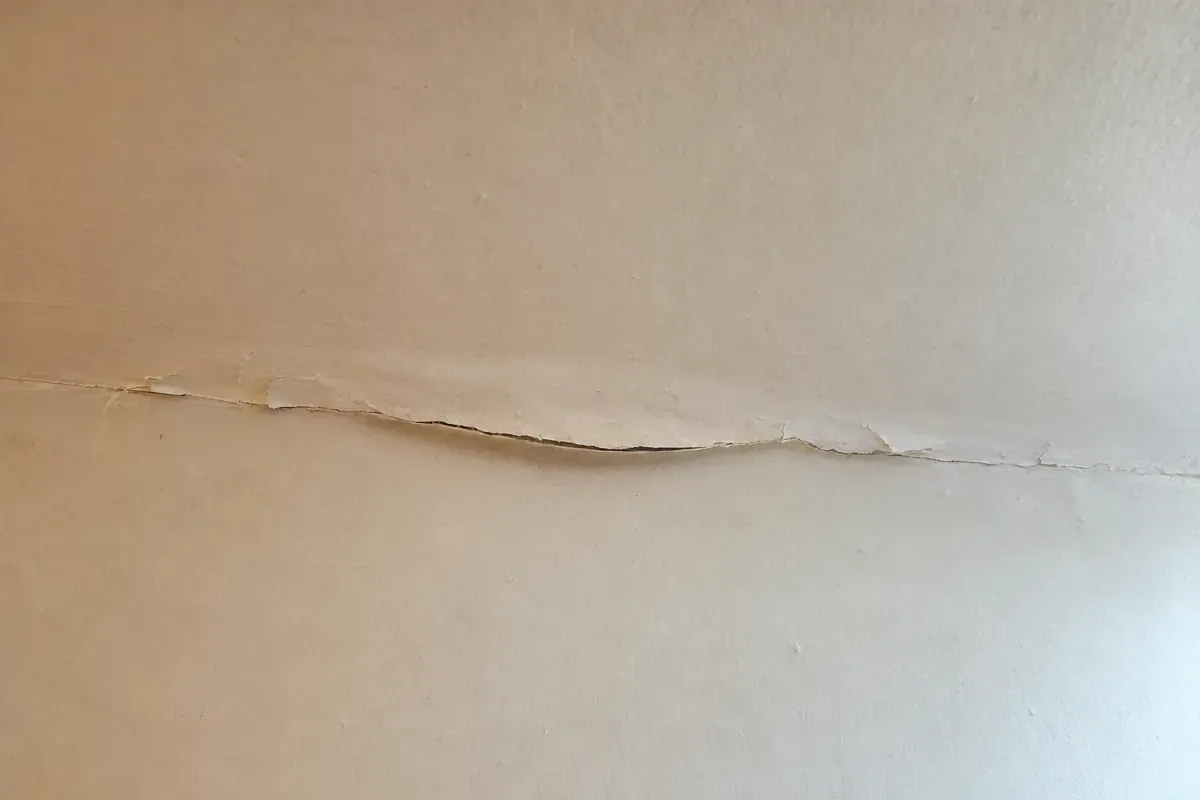
Why does old plaster crack in the first place?
Plaster goes on wet over narrow wood strips called lath, nailed up with small gaps between them. The wet plaster squeezes through those gaps and curls over the back of the strips, forming what plasterers call keys, a little like the head of a rivet. The keys are what hold the wall on.
Over many decades a house shifts, framing dries and shrinks, doors get slammed, and the air swings from dry in heating season to damp in summer. Each swing flexes the lath a little, and some keys snap. Notice that the crack you see is usually only the surface sign: the broken keys behind it are the real problem, and why simply filling the line rarely lasts.
What is the shape of the crack telling you?
Hairline in a corner
Usually seasonal movement and cosmetic. Taped and finished, it tends to stay closed.
Angled line off a door frame
The frame around the door has shifted. Bridged with tape and setting compound; check the door still closes freely.
Level line across the wall
Often follows a strip of lath or a drywall seam. Press beside it: if the surface gives, it needs re-attaching first.
How can you tell if the plaster has come away from the lath?
Press gently with a flat palm a few inches from the crack. Sound plaster feels like part of the house. Loose plaster gives slightly, and you may hear a faint crunch as broken keys shift behind it. A bulge you can see when you look along the wall from an angle is another sign.
On a ceiling, do not press at all. If a plaster ceiling sags, first cut power at the breaker to the fixtures in that stretch of ceiling, then keep the room clear beneath it and call, because a loose section of plaster is heavier than it looks.
What does a proper plaster repair involve?
- Re-attach first. Loose plaster is fixed back to the lath before anything else. Small holes are drilled through it, adhesive is injected behind, and the plaster is drawn back with plaster washers, thin perforated discs screwed through the surface.
- Open and clean the crack. Crumbled edges are trimmed and the crack is widened slightly so fresh compound can lock in.
- Bridge it. Fiberglass mesh tape spans the crack, embedded in powder-mixed setting compound, which cures by reaction and barely shrinks compared with bucket mud.
- Feather and follow. Two or three wider coats blend the repair outward. Old plaster is rarely dead flat, so the coats follow its gentle waves instead of leaving a flat spot that catches the light.
- Prime and finish. Primer goes on, then paint if you asked for it in the quote.
When does cutting it out make more sense?
Sometimes re-attaching is not worth it: the plaster crumbles to powder when touched, has already fallen off the lath, or was soaked by a leak. Then the damaged area is trimmed into a clean rectangle and drywall is fitted into the gap. This is the point where plaster work turns into ordinary sheetrock repair, with one twist. Old plaster with its base coats tends to stand prouder than one sheet of half-inch board, so shims or extra layers bring the new board out to the old surface. After that the joints are taped and feathered like any drywall patch.
If the patch would be larger than about a third of the wall, it is worth asking about skim coating or covering the whole wall instead. The comparison on the homepage sets those options side by side.
What does plaster crack repair tend to cost?
Fixr's plaster cost guide puts plaster repair between $50 and $120 for each square foot nationally, and its drywall guide puts a crack at $60 to $330. Both are countrywide averages, not local prices. On a plaster wall, how much plaster has come loose matters far more to the price than how long the crack is.
What do people want to know about plaster repairs?
Is a repaired crack likely to open up again?
A crack that was only filled often does. One that is bridged with mesh and setting compound, with any loose plaster re-attached first, is far less likely to return. If the house itself is still moving, a fine line can reappear, and that is a sign to look at the cause.
Can a patch blend into a slightly wavy old wall?
Yes. A patch that is too flat stands out on old plaster, so the final coats are feathered wide and follow the contours already there.
Is a hole that goes right through to the lath fixable?
Usually. If the lath is intact, the hole is filled in layers. If the lath is broken, a piece of drywall or expanded metal lath is fitted as backing first.
Does plaster work make more dust than drywall work?
It does, because old plaster is hard and gritty. Ask for the doorway to be sheeted off and for sanding with a vacuum attached where the room allows it.
Have a crack you would like a second opinion on?
When you reach out, a pro from around Lake County gets back to you, hears the story and prices the job.